Is Radon-Resistant New Construction Required in Fort Collins, CO?
If you are planning to build or buy a new home in Northern Colorado, the answer is a definitive yes. Since 2005, the City of Fort Collins has mandated that all new residential construction include radon-resistant features, making Radon-Resistant New Construction in Fort Collins, CO a legal requirement, not just a recommendation.
Why Fort Collins Requires Radon-Resistant Construction
Fort Collins is located in a high-risk “Zone 1” area, where roughly 70% of homes test at or above the EPA’s recommended action level of 4.0 pCi/L. Because of this elevated exposure risk, local building codes are a critical part of community public health.
In response to its geographical inclination toward naturally occurring radon gas, the city specifically adopted Appendix F of the International Residential Code (IRC), which outlines the requirements for Radon-Resistant New Construction (RRNC).
What the RRNC Code Requires
The RRNC code requires every new single-family home and multi-family dwelling in Fort Collins to include:
-
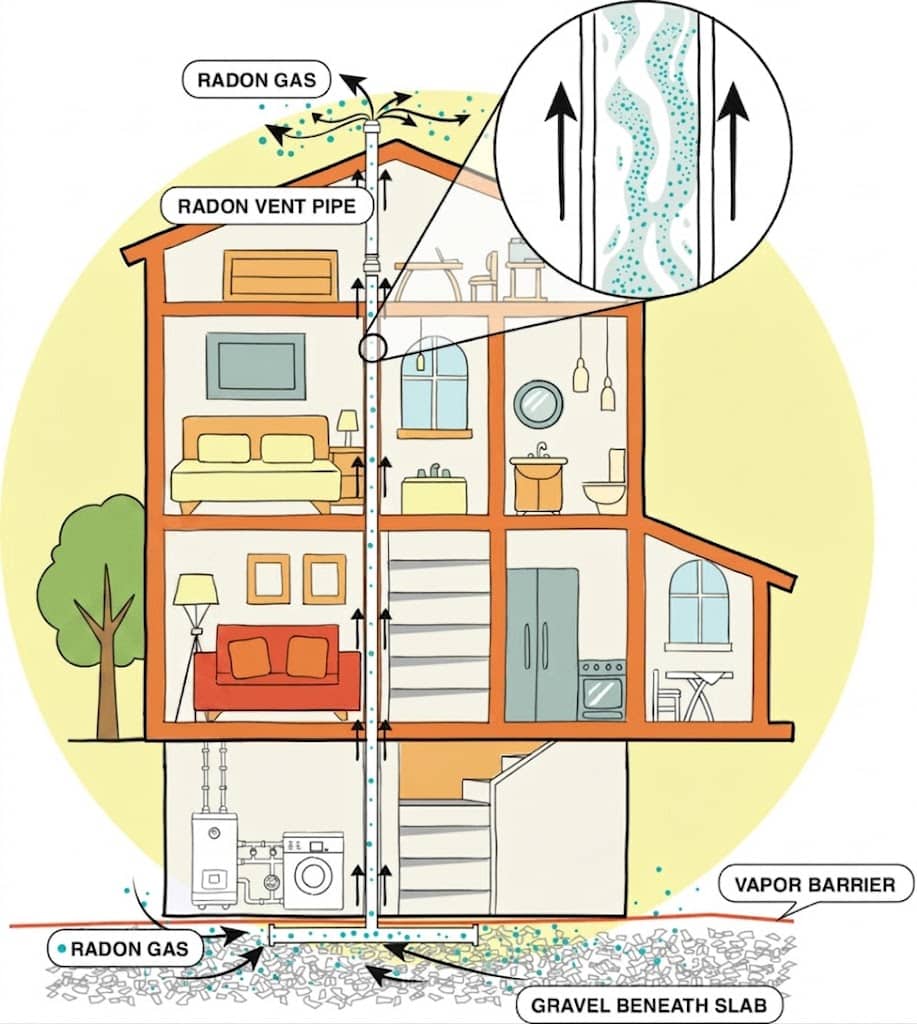
A passive radon system integrated directly into new-build construction
-
A radon disclosure brochure provided by sellers to buyers before any contract is signed
-
A radon test performed during the standard inspection and home-buying process
Every homeowner should know the status of the radon system in their house before purchasing or moving in.
The Benefits of Building a “Radon-Ready” Home
Building a home to be “radon-ready” from the start is significantly more cost-effective than trying to retrofit a system later. Here’s why integrated construction matters:
-
Hidden vent pipes: Pipes can be concealed within the walls during framing rather than installed on the exterior of the house afterward.
-
Easier activation: If your home later tests above the legal radon limit, activating the system is faster and more affordable.
-
Healthier indoor air: Without these built-in systems, radon levels in new, tightly sealed homes can climb much higher due to limited natural ventilation.
Passive vs. Active Home Radon Mitigation in Fort Collins, CO
Although the City of Fort Collins does not require builders to test the air after construction, it is strongly encouraged that new tenants and homeowners do so.
If a passive system is already installed, a certified professional can easily upgrade it by installing a radon fan in the attic or on the exterior of the home. This conversion creates an Active Home Radon Mitigation system in Fort Collins, CO, a more efficient and effective method for preventing radon gas from accumulating indoors.
Moving Into a Fort Collins Home Built After 2005?
If you are moving into a home built after 2005, you already have a head start on safety, as your home likely includes a passive vent pipe ready for activation.
However, given that the average radon level in Larimer County is 7.8 pCi/L—nearly double the EPA action limit—you should still perform a short-term radon test once you move in. Hiring a certified radon testing professional ensures your results are accurate and not affected by lower-quality DIY materials or shipping delays.
Protect Your New Home With Radon-Resistant Construction and Testing
By combining Radon-Resistant New Construction in Fort Collins, CO with proactive radon testing and mitigation, you can ensure your new home remains a healthy environment for years to come.
Ready to Test or Activate Your Home’s Radon System?
Whether you’ve just moved into a new build or want peace of mind about your indoor air quality, our certified team is here to help. Contact us today to schedule professional radon testing or Home Radon Mitigation in Fort Collins, CO—and breathe easier knowing your home is protected.